
I Ride to the Beach Every Morning to Fish. The Veloa Is the Reason I Actually Go.
Novedades de producto7 min de lectura
There's a version of this story where I don't go.
That version starts the same way. Alarm at 5:40, coffee, the tide chart already checked the night before. But then comes the part that kills it. Loading rods into a car. Finding the turn-off. Driving twenty minutes to a spot with parking, which is never the spot with fish. Circling. Paying. Walking the last stretch anyway, carrying everything, arriving late and slightly annoyed.
I did that version for about two years. I went maybe twice a month.
Now I go almost every day. The only thing that changed is how I get there.
The problem with the good spots
Every person who fishes a coastline knows the same uncomfortable truth: the best spots are the inconvenient ones.
The pier at the end of the promenade has parking, a café, a bin for your line clippings, and forty other people with the same idea. The rocks two kilometres past it, where the sand gives out and the path turns to compacted gravel and broken shell, have none of that. No parking. No path a car can take. Just a fifteen-minute walk from the nearest place you can legally leave a vehicle, carrying a rod bag, a cool box, a folding stool and a bucket.
That walk is what stops people. Not the early start, not the cold. It's the logistics tax on the last kilometre.
An e-bike doesn't remove the distance. It removes the tax.
What the ride actually looks like
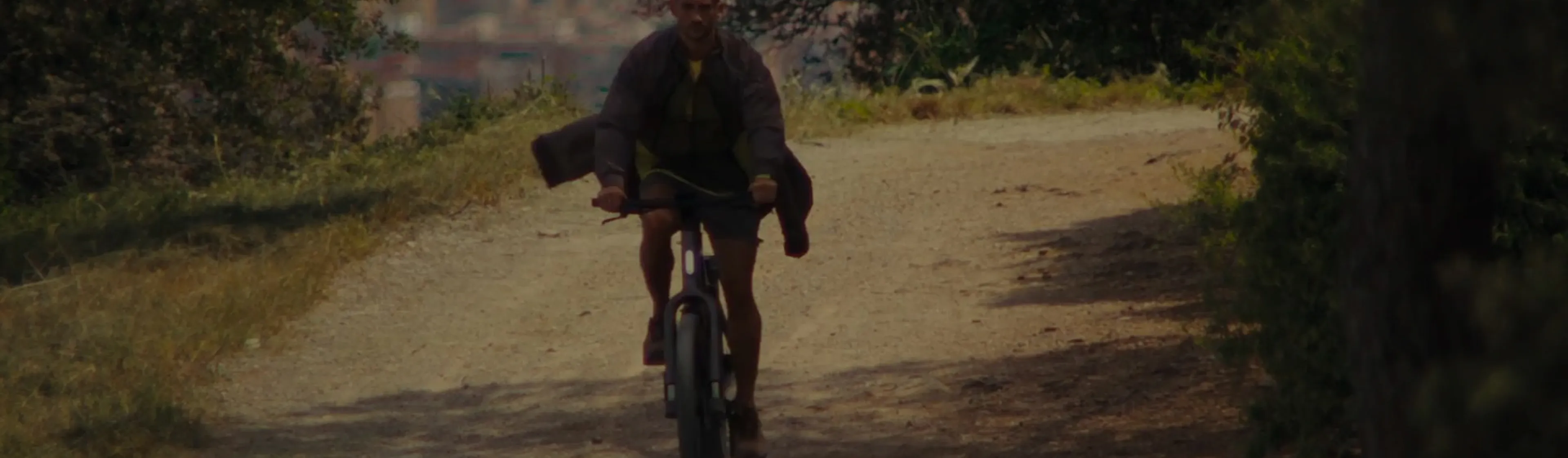
I leave before sunrise. The first three kilometres are pavement: quiet streets, one long descent, a roundabout that's empty at that hour. On assist level one the Veloa just rolls. I'm barely pedalling, and I'm not sweating, which matters more than it sounds when you're about to stand still on a rock for two hours in a sea breeze.
Then the road ends and the promenade starts. Paving stones, then boardwalk, then the loose stuff.
This is where the 20" fat tyres stop being a styling choice. Loose sand at the edge of a beach path is genuinely difficult on a normal bike. The front wheel knifes in, you lose the line, you put a foot down. Wide tyres run at low pressure float over it instead of cutting into it. You don't fight the surface, you sit on top of it. Same story on the gravel stretch, the same on wet compacted sand near the waterline, the same on the rutted dirt track behind the dunes that technically isn't a path at all.
I'm not claiming it's a sand rail. Deep, dry, soft sand will beat any bicycle ever made, and if you point the Veloa at a dune you'll be walking it. But every real-world surface between my flat and the water (tarmac, cobble, boardwalk, gravel, packed sand, dirt) it handles without drama and without me thinking about it.
That's the actual feature. Not "goes anywhere" as a slogan. "Goes anywhere" as in: I stopped planning my route around what the bike could handle.
Carrying fishing gear on a bike (this part is real)
I want to be honest here, because most content about e-bikes and hobbies skips the boring logistics, and it's the logistics that decide whether you keep doing it.
Here's my setup after a lot of trial and error:
The rods. Two-piece travel rods, broken down, in a hard tube strapped diagonally across the rear rack. Do not ride with a rod sticking out sideways. I tried it once, clipped a bollard, and it was exactly as stupid as it sounds.
The rack. The rear carrier does most of the work. A cool box bungeed flat on top, tackle box underneath in a pannier. Weight sits low and behind the saddle, which is the right place for it. You notice it on tight turns and nowhere else.
The bucket. Clipped to the side. It rattles. I've made peace with it.
Total load: roughly 12 to 14 kg of gear on most mornings. The Veloa doesn't complain. The 250W motor is legally capped like every EPAC bike sold in Europe, so it's not going to launch you up a wall with luggage on. But on the gradients I ride, loaded, it's completely unbothered.
The thing nobody tells you: the return leg is heavier. You're tired, it's warmer, and if the morning went well there's a few kilos of fish and melting ice you didn't leave home with. That's the leg where the motor earns its keep.
Range, and why I stopped thinking about it
The Veloa is rated at 50 km on a charge, from a 48V 12.8Ah battery.
My round trip is about 18 km. I could do the week on one charge if I wanted to. In practice I plug it in every second night out of habit, and a full charge takes four to five hours, so it goes on while I'm cleaning the catch and comes off before dinner.
Real-world range is always lower than the sticker, on every e-bike from every brand, and anyone who tells you otherwise is selling something. Cold mornings, headwind, 14 kg of tackle, and a rider who uses assist level three because he's not a hero. All of that costs you. Call it 35 to 40 km in the conditions I actually ride in.
Which is still double my route. The number I care about isn't the maximum, it's the margin. I have never once stood on a rock at 7 a.m. doing mental arithmetic about whether I'll make it home. That's what the battery bought me.
The folding thing, which I underestimated
I'll admit I thought the folding frame was a feature for people with small flats.
It is. But it's also the reason the bike gets used on the days I don't ride to the beach.
Once a month or so, we drive somewhere further up the coast for the weekend. The Veloa folds into the boot alongside the bags. It comes out at the other end and I get to fish an unfamiliar coastline on the same terms as my home one. No rental, no research about parking, no compromise about where I can reach.
Same logic for the train. Fold it, take it on board, unfold it in a town two hours away.
A bike you can put in a car is a bike that doesn't limit your holidays to places that suit it.
What actually changed
I want to be careful not to oversell this, because the bike didn't teach me to fish and it didn't put fish in the water.
Here's what it did. It dropped the cost of going from a small production to a decision I make in ten seconds.
That's the whole thing. When something takes forty minutes of setup, you do it when you're motivated. When it takes ten seconds, you do it when you're mildly curious. And the difference between fishing twice a month and fishing five times a week is not skill, gear, or luck. It's how many mornings you actually show up.
I've caught more in the last six months than in the two years before it. Not because I got better. Because I went.
If you're thinking about it
A few honest notes:
Get a decent lock and use it. You'll be standing thirty metres from the bike, distracted, for hours. Don't learn this the hard way.
Rinse the drivetrain. Salt air is not kind to a chain. A freshwater rinse and a quick re-lube once a week takes four minutes and adds years.
Check your local rules for beach and dune paths. They vary a lot between regions, and protected dune areas are usually off limits to bikes for good ecological reasons. Ride the marked routes.
Helmet. Loaded bike, low light, wet boardwalk. Wear one.
Set the assist low on the way out, high on the way back. Save the battery for the leg where you're tired and carrying more.
The Veloa is a folding fat-tyre e-bike at €1,099, and on paper it reads like a city commuter: 250W, 25 km/h, 50 km range, folds into a boot.
On my mornings it's a fishing vehicle that happens to fold.
Go find the spot without parking. That's where they are.